Thursday, February 3, 2011

Kings, Wings and Magic Things!

 The post-Christmas season brings its own special batch of goodies to every French boulangerie and patisserie. Just when you thought you could start the New Year with a diet, think again. January means (besides lots of bleak, cold days) it's time once again, to crown a king and queen and enjoy the golden flaky crust and soft, almond-y interior, called frangipane, of the galette des rois, or king's cake, as it's known in the US (where it's also more associated with Mardi Gras because of traditions from Louisiana). However, the French version is a completely different dessert, which you will only find if you're lucky enough to have a traditional French bakery pres de chez vous. The galette is baked to celebrate the Epiphany, a holiday which celebrates the visitation of the Magi to Baby Jesus. The holiday is historically on January 6, the day after the Twelve Days of Christmas, which begins on Dec 25. However, in some countries it is celebrated on the Sunday after Jan 1, which was the day I enjoyed my first real galette des Rois (Jan 2). The cake usually comes with one or two crowns so that whoever finds the fève (the hidden trinket, usually a baby to represent Jesus), is crowned the king/queen. Traditionally, the youngest is supposed to go under the table, and while someone else cuts the cake, dictates who gets each piece to ensure a fair game. However, since the youngest was 18, we didn't make him go under the table. I didn't have beginner's luck that day, but while enjoying my second galette, I saw something solid peaking out, and sure enough, I had found the fève! After staring at it oddly, I showed it to my host parents and asked them what it was. Since my host mom had picked up the cake while shopping at Ikea, instead of a baby Jesus, I got a small tile with Ikea's logo and one of those L-shaped screwdrivers on it! Oh the shameless self-promotion. This delightful treat also gave the teachers at my school another excuse to have a potluck lunch in the teacher's lounge! Cheese, bread, homemade quiches, desserts--and of course, wine (yep in the middle of the school day!). I do love a good French potluck.

Luckily, these delicious cakes are available all month long--and maybe even longer! Today I still saw a few bakeries with galettes for sale.

oreillettes (crispy version)
  The second seasonal treat is apparently another Lyon specialty, but which can be found in various forms all over France at this time of the year. They are called bugnes, which means angel wings, and they do indeed taste quite heavenly. I knew they were a lyonnais specialty, but I didn't realize they were a seasonal specialty for the Mardi Gras/Carnival season until about a week ago when my host mom came home with a box of these pictured on the left. I had always seen the crispy version in a couple of boulangeries in Vieux Lyon, ie tourist central, but had recently starting seeing them pop up in other boulangeries as well, along with the previously-unseen soft versions, which are very similar to the beignets of New Orleans (which are alone worth a trip to the Big Easy), a better version of your average powdered donut, especially when warm and
bugnes stéphanoises (soft version)
freshly fried. Of course I lost no time in sampling this curious new delicacy, and soon after my host mom explained to me that they were for Mardi Gras. With a little help from wikipedia, I learned that they already existed way back in ancient Rome where they were enjoyed during Carnival. The word bugne actually comes from regional French to designate the beignet, but today the two are distinct, with the word bugne referring specifically to this regional/seasonal specialty and beignet referring to other types of donut-like products available anywhere anytime. The crispy version, known as oreillettes originated in Lyon, whereas the softer version, called the bugnes stépanoises came from Saint Etienne, a small city in the Lyon region. I have already made sure to pr ofiter bien from this limited time offer. Oh quelle joie to live in a country already overwhelming in its selection of sweet sensations year-round, plus unexpected seasonal treats as well! I love it not just beca use I get to stuff my face with more delicious desserts, but because these specialties also have anywhere from hundreds to thousands of years of history and tradition behind them, and a couple of them, the bugnes and the papillottes from the Christmas season, even originated right here in la belle ville de Lyon! Eat your heart out America. This is what I call soul food.

What will they come out with next??


Wednesday, February 2, 2011

C'est à cause des Américains!


I begin with an anecdote. Today in class, a group of garçons were chatting away, heedless of the fact that I was trying to teach (well ok, in spite of this fact), so I stopped and asked them what was so interesting, what were they talking about. "Oh," one of them responded, "we were just talking about the economic crisis. C'est à cause des Américains." (It was caused by Americans). "Well, yeah. Sorry," I shrugged, matter of factly, after trying to make him repeat all of that in English.

Here, everything is blamed on America. (Naturally, I exaggerate, but bear with me). The economy (ok true), globalization (ie global uniformity), even bin Laden has begun targeting France because "the refusal of your president [Nicolas Sarkozy] to withdraw from Afghanistan is the result of his obedience of America." Bush was universally hated and luckily, Obama is just as universally worshipped (despite his problems at home). McDonald's is making the world fat and Sarah Palin is a psychopath. I paint a bleak picture here--but of course it's not as black and white as that. I'm not saying France hates the US--it's certainly more of a love-hate relationship, if anything. Mcdo (en francais: Mac-doe) is always crowded, wearing Nike (pronounced to rhyme with mike rather than nik-ee ) shoes or a North Face jacket is a sign of la classe, and of course, everyone loves American movies and prefers American series to French ones. We are often the butt of jokes, but hold a certain fascination for the French-especially for their President, Nicolas "Rockstar" Sarkozy.

My students are fascinated by the fact that I not only come from the US, but from the ultimate dreamland, CALIFORNIA!! Naturally, I'm friends with moviestars and know how to surf--but oh yeah, Arnold Schwarzinegger is (now officially was) governor and Los Angeles is a hotbed of violence (though I explained that as long as you avoid Compton, you should be safe, at least from Trojans).

We've been allies since the beginning--France helped us win the Revolutionary War. Her rivalry with Britain outweighed ideological issues. Considering that France was still a monarchy at the time, it seems counterintuitive--and ultimately counterproductive given the outbreak of the French Revolution 8 years after the conclusion of our own--to support such a cause. This was simply the beginning of our complicated, but ultimately fruitful and generally friendly, relationship.

Of course, with a few exceptions, this "blame" doesn't translate to out-and-out anti-Americanism or hostility towards actual, real-life Americans. First of all, most French people don't actually know any Americans nor have they been to America. Clearly, their judgement--like ours towards them--is mostly based on stereotypes, snap judgements and that formidable beast, the MEDIA. In all of the time I have spent in France I have felt next to no hostility towards myself for being American (not that I haven't sometimes experienced hostility--it just wasn't for being American. Usually it was for making someone do their job, oh the horror.) Most people, like my students, are pleasantly surprised to find out I'm American. I say surprised because they immediately wonder what I am doing here--what could an American find so fascinating about France? In fact, it is the many ways that France is different from the US that I find fascinating--the many ways that France isn't the US or even a wanabe US (well, at least not in every aspect). I mean sure, they copied us with a revolution a few years after the success of our own, but they made it their own. Each of our respective revolutions defined the future route each nation would take, and though we both (eventually) ended up as democratic republics, there are reasons we sometimes rub each other the wrong way--two very different histories have shaped two very different mentalities. Maybe instead of getting offended, turning to xenphobia or setting up camp inside our own inflated egos, we should just realize that "Americanization" and all of its reprecussions don't please everyone. There are in fact functioning worlds outside our own. Our way is not the only way or even always the best way--universal healthcare hasn't caused Europe (or dare I say Canada) to crumble. Hopefully we'll begin to recognize the importance of our global image before we find ourselves the subjects of the Queen of Fools, Sarah Palin.

Yes, we're important, globablly so. We're a great hulk hovering over everything. We're the number one financial and political power, have the most billionaires, our President is the most powerful person on Earth, people everywhere munch on McDonald's fries and sip Startbucks' coffee. Our movies and television shows spread our language and culture around the globe. We have indeed provided much of the force behind globalization--a word often considered synonomous with Americanization. Ok, that's all great. But, like Peter Parker, we too must remember that "with great power comes great responsibility." And perhaps a nice slice of humble pie.


*C'est à cause des Américains: (negative connotation) It's because of/thanks to/caused by Americans!

The title of this post was also inspired by the favorite quote of my host dad (who, btw, loves Obama, likes America--especially our blues music--and has no problem at all with Americans), who likes to tag it on jokingly as he smiles and nods in my direction. Really though, sometimes it's true and it is both humbling, exasperating (because as an American, I can't help but feel partially responsible), and kind of frightening to realize just how much the domestic affairs of the US can affect the entire world--and what the world thinks of this. Traveling--and especially living--abroad somehow makes you, or at least me, feel both prouder and more ashamed of being an American, depending on the context. At any rate, it most certainly makes you extremely aware of your nationality. Nothing has ever made me feel more American than living in France, for better or worse. So, as the ink from the "Made in America" stamp stubbornly darkens on my forehead, in response to this oft-repeated exclamation, I must reply, defiantely, tant pis, c'est la vie! (too bad, that's life!). Now someone find me an American flag so I can do the pledge of allegiance and sing a little "Oh say can you see." The one flapping in my host family's backyard has seen better days...

Tuesday, January 11, 2011

Eating in Lyon, Part I

One of the greatest pleasures of traveling is savoring the local cuisines, and in no place is that truer than France, a country globally recognized for the excellence of its food, an integral aspect of its culture. The French take their food very seriously. From a country that created McDonald's and TGI Friday's, Americans are apt to make some disasterous faux-pas in French restaurants--asking for a "doggie bag" (doesn't exist), telling the waiter you didn't like your food (oh know you di-n't!), sending it back (OMG-well, I have survived to tell this tale), or even worse, not finishing every last bite, a criminal offense in the land that created canard à l'orange, foie gras and creme brulée. These actions can warrant you anything from a confused side-long glance to a cold glare and the disappearing act. Don't be frightened--the vast majority (at least in my experience) of French waiters are perfectly nice, and many are even down-right friendly and chatty, but it is important to know the rules of the game before putting your napkin in your lap. If you don't come with a hearty appetite, be prepared to say "c'était bon, mais j'ai plus faim." (It was good, but I'm full.) I still marvel at the way tiny French women are able to pack away plateful after plateful--where does it all go??

A perhaps lesser known fact is that Lyon is known as the "gastronomic capital of France." This is quite high praise in a culinary center such as France. This is yet another quality that differentiates Lyon from Paris: it has its own local and regional specialties, some of which can be difficult to find or even unknown outside of the region. In fact, Lyon has its own specific type of restaurant called a "bouchon," which serves lyonnaise specialties. Its food is indissociable from the city itself. Two of my favorite specialties are saucisson chaud (especially with pistachios in it) and the many pastries made with pink pralines, as well as a holiday treat called papillottes, which are traditionally eaten around Christmas. They are wrapped in shiny foil and come with a paper inside with famous quotes or random trivia. Though today they are eaten all over France, they originated in Lyon. When I told my students that papillottes don't exist in the US, they looked at me, agast, and one of them exclaimed, "but it's not Christmas [without papillottes]!!" Well, we of course have our own Christmas treats, but I will indeed be missing these little chocolate praline delights next year.

Anyway, to the point of this post, which is part one of a mouthwatering mini-series. As I am spending 7+ months in the midst of so much delicious-ness, it would be a crime not to include it in my blog, as it is indeed an essential part of my experience. Below is a list (thus far) of various types of eateries that I have enjoyed during my first few months (as well as some places to avoid). So get ready to take some notes for your future trip to Lyon!
menus indicates a prix fixe, or fixed price menu offering 2 or 3 courses for one price, often with a few options for each course. Most French restaurants will offer this option as well as a la carte. Often they will offer daily lunch menus which are usually a great deal, so lunch is the perfect time to sample expensive restaurants!

Les Adrets
30 rue du Boeuf (Vieux Lyon)
15.50 euro lunch menus which include appetizer, meal, dessert, wine and coffee.
Lyonnais/French cuisine
Reservations recommended unless you're feeling lucky. I did happen to get lucky the first time I wandered past and decided to step in for lunch. The chef offers two choices for each course at lunch and everything I had was absolutely delicious.

9 rue Mercière
(this is both the name and the address)
2e arrondissement
8-9 euro plats du jour for lunch, different menus served all day starting at 15 euros.
Lyonnais/French cuisine
Also delicious, generous portions, NYC decor!

Brasserie Georges
30 cours de Verdun
2e arrondissement, Perrache
For a really classic Lyon establishment, some undeniably delicious cuisine, and great a art deco interior, come here for, as it says on the wall, bonne bière et bonne chère depuis 1836! (good beer and good fare since 1836!)
menus starting at 19 euros, also a la carte


A Chacun Sa Tasse
2 rue du Griffon
1er arrondissement, Opera
A quick walk up from the Opera house, this delightful tea/coffee house is tucked away, though is clearly a favorite for locals who packed the place around afternoon coffee time (15-16h). It is super cozy, especially the upstairs where there are couches and a relaxed decor. It's a great place to grab some coffee/tea/hot chocolate with friends or a book. They have a HUGE menu, especially great for tea people like myself.

Nulle Pierre Ailleurs
2 quai Roman Rolland, Vieux Lyon
Perfect place for fondue, raclette or tartiflette (which I have yet to try), the cheesy specialties of the Alps region. The fondue and raclette (about 15 euros/person, typical price for these dishes, includes a small salad and charcuterie) are delicious, and the wooden decor combines with the cuisine to create the perfect alpine ambiance smack in the middle of the city.

Le Banana's
Place du Gouvernement, Vieux Lyon
Back to basics--cheap and tasty, sweet and savory crèpes, wide selection, open for lunch, dinner and snacks in between.


And for the dessert...

Terre Adelice
rue Saint Jean, Vieux Lyon
A million flavors of ice cream (150 to be exact--take that Baskin Robbins!)--including pink praline, 44 different fruit flavors and so much more!

Spécialites Lyonnaises
rue Saint Jean
best pink praline tart in town (though the tea is way overpriced) and other Lyon specialties

Bouillet
Vieux Lyon
Place du Change
for all of your macaron dreams; they have sweet AND savory flavors! By the way, that's macarOn not macarOOn. These French delights are not the coconut balls you know in the US. They are brightly colored, little sandwich cake-cookies with a meringue shell and some sort of jam or creamy filling. Tres a la mode right now and so tasty!


So that's my list so far, watch out for part 2!
Other tips: Many of the restaurants on rue St Jean, the heart of Vieux Lyon, are tourist traps with crappy food, so watch out for that! Whatever you do, avoid the competing clones that fill Place Neuve Saint Jean. They all claim to be "veritable bouchon lyonnais," each with the exact same menu and exact same disappointing cuisine. This is not heavenly gastronomy you came to Lyon for. However, many of the boulangeries along this street are pretty good, so don't hesitate to try a brioche aux pralines or grab a baguette sandwich or quiche lorraine for lunch!

Bon Appétit!

Sunday, December 26, 2010

Un Noël Blanc

"Twas the night before Christmas, when all through the house not a creature was stirring, not even a mouse. The stockings were hung by the chimney with care, in hopes that St. Nicolas soon would be there." *

an ice cream yule log
This year was definitely a very white Christmas, and not only because of all of the gently falling snow that created quite the winter wonderland, but also because of its newness. I experienced a whole new kind of Christmas this year, first and foremost because it was the first without my family. Although this year marked my third Thanksgiving sans famille, it was my first Christmas. Luckily though, I was still able to spend it with a family, even if it wasn't my own. This was also my first Christmas abroad, in la belle France.


So the big event in France is the réveillon, the big, family, Christmas Eve dinner (and Christmas mass for those so inclined). Around 5pm, we headed to Belley, a town of 12,000 where my host dad grew up, to have dinner with his family at his sister's apartment. His 91 year old mother and brother's family joined us as well. I quickly got over the awkwardness of being the sort of odd-man-out and meeting a bunch of new people because they were so warm and
welcoming, and most importantly, hilarious. After the first half hour, my cheeks were already hurting from laughing so much.


the dessert spread

As this is France, we of course had round after round of food, (though I abstained from certain parts of it), small hors d'oeuvres, then huitres (oysters), foie gras (made by my host mom's brother), salad, saucisson chaud aux truffes (a lyon specialty, hot sausage with black truffles), then an entire spread of desserts. My host mom said that in Provence, it is a tradition to have 13 different desserts and we came pretty close--chocolates, chocolate dipped oranges, clementines, meringues, 3 buches de noël (yule logs)...needless to say I was rather stuffed by the end of the night, and warm too after champagne and at least 4 different kinds of wine (a couple of which I was politely forced to try, though I didn't put up much of a resistance), including a fabulous 1985 Burgundy, from a dusty bottle, saved for just such an occasion. I happily savored it with a wedge of comté, a match made in heaven. The evening's entertainment included a rousing round of "Silent Night" (en francais of course) sung slightly off-key by the adults crowded around an iphone from which they read the words (one of the cousins captured the magic on her camera haha). I answered all of the typical questions about where I'm from, what I'm doing here, Obama, explaining my masters and what I want to do with it, etc. They especially liked my answer to the "why France" question, toasting me when I explained that after spending a semester in Paris, I fell in love with France and voilà, the rest is history. At one point I made a point of defending California wines, though I didn't get a chance to tell the "Bottle Shock" story. Another time, another time Frenchies.


After the meal, it was present time, and to my surprise, I had my own little pile of cadeaux! Around 1am, the snow had finally stopped falling, the food was almost gone, and (after the typically lengthy French au revoir) we headed back to Lyon for "a long winter's nap."

The next day I stayed up late again to have a skype Christmas with my family. I finally got to see them open their European presents and I finally got to open my American ones from the box I had received a week earlier. Despite the thousands of miles separating us, and the blurry webcam, it was almost like I was there, a true Christmas miracle.

"Merry Christmas to all, and to all a good night!"

*Stockings are definitely not a part of the French Christmas tradition. When showing "How the Grinch Stole Christmas" to my students, I had to explain the concept to some very confused faces.
Also, in general, their idea of "christmas decorations" is a Santa climbing in the window and a sad, lonely string of lights hung randomly from the roof. They are clearly much more energy conscious than we are, and are just beginning to catch on to the Hallmark, commercial-y aspect of the holiday, but I definitely missed driving through neighborhoods past extravagantly decorated houses (à la National Lampoon) listening to the 24/7 Christmas radio station.

Thursday, December 23, 2010

Chocolate & Other Drugs

It's Christmas eve eve and I just returned from five days in Switzerland. Three years ago, during my undergraduate study abroad in Paris, I stepped over the border and spent a few hours in Geneva and Lausanne, but this time, I went deeper, tracing a route from Geneva up to Zurich, stopping in Interlaken and Lucerne along the way. Switzerland is really a very unique country; it is most definitely not another mini-Germany (like Austria for example), even though German is spoken in a large chunk of the country. Despite this, it actually has four official languages: French (west), German (middle), Italian (southern areas around Italian border) and Romansh (east). This linguistic and cultural diversity has created a very decentralized country, where each canton is like a US state, so that each one has different laws, unlike centralized, single-law France. As well, the country's official name is in Latin: Confoederatio Helvetica, hence the "CH" abbreviation you might notice on websites, bumper stickers, etc. This name comes from the Celtic Helvetii tribe that originally settled here.

To be more accurate, the German most often heard around here is actually "Swiss-German," which seems less harsh than German-German, and is sprinkled with French words, like "merci" for example. It must be odd to travel across your own country and hear so many different languages, and perhaps not even be able to understand them (though I'm sure most Swiss learn at least German and French.) Often, things are written in English, the language of globalization.

In Switzerland, swans glide gracefully through crystal-clear rivers, lakes are encircled by snowy Alps, which often dominate the horizen, tall, thin church spires punctuate the city skylines, while their clockfaces survey the scene below, larger versions of one of the country's non-edible specialties--watches. Wooden chalet-style houses dot mountain towns and valleys, and the red flag with its white cross, synonomous with neutrality, waves proudly in the crisp, alpine air.

Each stop on our (ie Lindsay and I) journey had its own atmosphere. Geneva, home to the UN, is a truly international city, just across the French border, where Italian, English, French, German and more can be heard from every corner. Even though French is the dominant language here, it is just as often tinged with an Italian or German accent, and seems to be only one of 2,3, or 4 languages they speak fluently. Geneva is also a commercial center, with neon signs topping luxury stores such as Rolex and Cartier surrounding the lake, a classier version of Times Square. We would have to wait until the next day to experience the "Swiss charm" awaiting us a couple of hours away in the Alps.

Nachst halt: Interlaken! We sped away from the urban, commerical Geneva, gaining in altitude as we ascended to this town between two lakes (Thun and Brienz) and surrounded by ginormous Alps. We used Interlaken as our home base for exploring this mountainous area, known as the Berner Oberland. Our hostel was rather quiet for the winter, as the avid skiers opted for rooms higher up, such as in the resort town of Wengen (Vengen), where we attempted to take a lift up to a trail, but because of the snow, the trail was closed, so we ice skated on the natural rink instead! Day two was gloriously sunny, after a cloudy morning and a menacing forecast, and we rode a gondola up to an elevation of 5360 ft to Murren, caught a panoramic view of the big three (peaks that is): Eiger (13,026), Monch (13,449) and Jungfrau (13,642), and were once again stymied in our attempt to go higher up to the Schiltorn for our James Bond breakfast in the revolving restaurant, this time because of the wind rather than the snow. The 007 film On Her Majesty's Secret Service was filmed up there.
Eiger, Monch and Jungfrau

Click on the link for live-cam action from Schiltorn:
http://www.schilthorn.ch/en/schilthorn/

We once again suffered this setback with dignity, sighing that we had at least saved ourselves 92 francs. Heading back down to the Lauterbrunnen Valley, we admired the sun glinting off of the reinforced waterfall, as the blazing sun melted leftover snow, causing avalanches every now and then, sending snow tumbling down the mountainside with an explosive crack. We stopped in a charming coffeeshop to enjoy warm drinks (including a chai latte!) and friendly locals before returning to Interlaken to explore our homebase, where were actually able to shed some layers under the afternoon sun.

I found this area to be a combination of rustic and real small village life and major tourist outpost, especially in Interlaken, the largest town in the area, and the transportation hub to the outside world. Swiss army knife, watch and chocolate shops line the main drag between luxury hotels, quite a contrast with the tiny mountain enclaves of Murren and especially, Gimmelwald (vald), with its 120 residents, cow farms and perfectly Swiss wooden chalets. I imagine this area is crawling with families and college students in the summer and fall, but in the winter, its mostly skiiers, Japanese tourist groups and a few stragglers like ourselves, spending Christmas vacation in real-life Christmas villages. Santa should really consider a move down to Switzerland.

Finally, we hit up two more Swiss cities, the charming, medieval/renaissance Lucerne and the larger, more buisness-like Zurich (with a nonetheless lovely Old Town center). Lucerne is truly as cute as a button, and gorgeous to boot, with two medieval, covered, wooden bridges, the more famous of which is Chapel Bridge, supposedly the most photographed monument in Switzerland. Though we had descended from our alpine retreat, huge mountains still surround the city, rising up as a beautiful backdrop to Lake Lucerne, and with Mount Pilatus (7000ft) hovering behind the water tower end of Chapel Bridge, completing one of the most picturesque sights I've ever seen. Our last day found us in Zurich, and unfortuately, Lindsay wasn't feeling well, so she took an earlier train home (apparently I have a penchant for getting my travel partners sick?), so I took on this last Swiss city on my own. At least I still had trusy old Rick Steves to guide me and keep me company on his "blitz tour" of the center of town, through 3 churches and their competing clock towers, a delicious hot chocolate break in a plush Christmasy cafe, Conditorei Schober, and a cruise on Lake Zurich. Though the morning started out rainy, by noon, the clouds had parted and the sun came out shining once again, thankfully proving another forecast wrong. I climbed 200 steps up the Grossmunster ("Big Cathedral") tower for a grand city view (and to work off that hot chocolate), wandered along glizty Bahnhofstrasse, and purchased a few mini-macarons known as "Luxemburgerli" at Sprungli, a perfectly soft, creamy and flavorful snack I enjoyed on my long train ride home. Three trains and 7 hours later, I was finally back in Lyon, as usual relieved to be back in familiar France, though I'm missing the mountains (they're just a little smaller from Lyon than Interlaken). Financially speaking, I also breathed a sigh of relief. Though the Swiss franc is about 1:1 with the US dollar, and thus things are technically cheaper for me, Switzerland is an expensive country, be warned!

Sunday, December 12, 2010

Everything is Illuminated

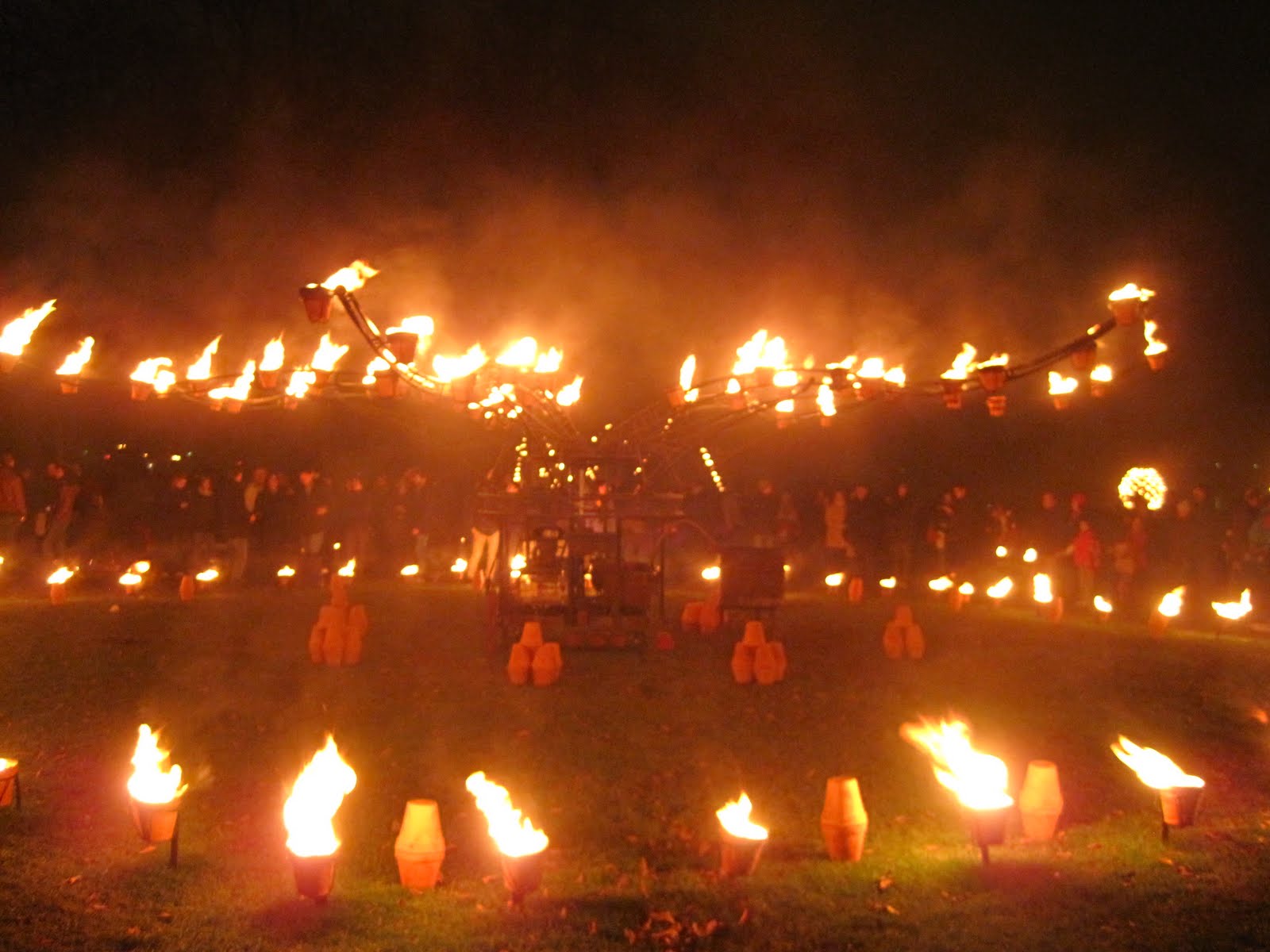
Every year, during the second week of December, Lyon holds its biggest event of the year: the Fête des Lumières (the festival of lights), also known as "le 8 decembre," as the celebration is to commemorate an event that occurred on December 8th, 1852. For 4 days, the city is beautifully illuminated, transformed by an inundation of colors, lights that sparkle, blink and twinkle, light shows projected onto familiar monuments--and of course, a flood of visitors from all over the world, attracted like moths to a flame (but much pushier).

The story begins in 1643, when the south of France, including Lyon, was struck by the plague. The municiple councillors promised to pay tribute to Mary if the city was spared (which it was), thus inaugurating an annual procession on this day (actually September 8) up to the Fourvière Hill to light candles and present offerings in her name.


It wasn't until 1852 that December 8th became a day of festivities dedicated to Mary. When the statue of Mary was erected next to the Fouviere Basilica, the inauguration was meant to take place on September 8th, but a flood forced them to move the date, and they settled on December 8th, which had already been a celebration of the Immaculate Conception in Lyon. On this day, the statue was lit up, fireworks were set off from the hill, and many residents even placed candles in their windows, lighting up their own buildings. Today many people still take part in this tradition, placing candles along their window sills.

I had been anticipating this event since I applied to the program, determined to attend even if I didn't get Lyon. Luckily for me, I didn't have to fight the masses for a cheap hotel room. Right at 6pm on December 8th, I eagerly waited in Place Bellecour for the festivities to begin. A projection on the ferris wheel put up for the event flashed images from past Fête des Lumières. Then the dramatic countdown began--10, 9, 8, 7, 6, 5, 4, 3, 2, 1! Balloons burst into the air, the Fourvière Basilica turned blue, and the Fete had officially begun! Lindsay and I wandered around the unusually warm evening (no hats or gloves necessary!), past colorful teepees (still wondering about that...), windmills, blue and red streetlights and an endless number of vendors shouting "vin chaud! vin chaud!", pausing to enjoy the fireworks just after 8. The next night (Thursday) we complemented our tour, hitting all the big sights before the out-of-towners poured in for the weekend. Our favorite was the fountain in Place des Terreaux (pictured above).


On the last night, we headed up to the big park--Parc de la Tête d'Or--where they had set everything on fire! Well, sort of...they had little flower pots of fire placed in trees and other sorts of displays. This was pretty cool (but can you say fire hazard?? in a PARK?? with millions of people??!!), and the fire kept us warm while wondered around.


All in all, it was quite an experience, but a lot of people--including my host parents--commented on the fact that it wasn't as good as previous years, and having seen postcards and pictures from other Fêtes, I have to admit, I was a little disappointed. Nonetheless, I still enjoyed it, saw a few really great displays, and am happy to have had the experience. However, the millions of toursits invading Lyon made it feel like Paris in the summer (minus the dripping sweat), so I'm glad they will have all returned home by now. While the sign next to Fourvière says "Merci Mary," I'll end this with a "Merci Lyon!"


Sunday, December 5, 2010

The Best Laid Plans of Mice and Men...

...Often go awry. Yes indeed they do. Yesterday, I set off for a day trip to Colmar with some other English assistants. Colmar, like the larger Strasbourg, is also located in the region of Alsace and known for its Christmas markets. For those not familiar with Alsace, it is located near the German border, and spent much of its history flip-flopping between France and Germany, thus a trip there is like traveling to Germany, but everyone still speaks French (apart from the many German tourists of course).

After a 4.5 hour train ride, we arrived in the Colmar, and stepped straight into the pages of Hansel and Gretel. Colorful, half-timbered buildings, snow-dusted Christmas trees, and a marchés de noël around every corner--add a few gum drops and you've got a veritable gingerbread village! Despite the cold and the Disneyland crowds, we shoved our way around the town and through the many Christmas markets, even managing to déguster (taste) some vin chaud (mulled or hot wine) and eventually find a restaurant that wasn't complet (full). After sitting at said restaurant for about 45 minutes waiting to order and then get our food, we devoured our meals in 10 minutes flat, already thorougly defrosted and anxious to finish winding our way through the markets before our 17h44 train. After wandering through the quartier of Petite Venise, lined with--what else--a canal, we made it through the last couple of markets (at one of which I bought a bag of thé à la noisette--hazelnut tea!), we numbly marched back to the train station, a little early for a our train, but in need of a second round of defrosting. Unfortuantely, as the sun had just set, we missed the town being lit up. Apparently, every night (during the holidays or no), the town is beautifully lit with different colored lights. Dommage.


Anyway, though we didn't yet know it, our real adventure had just begun. First, the train left 20 minutes late. Ok, no big deal, we would still be able to make our various buses, trams and metros. Well, the train gods had other plans in store for us. At about 20 till 11pm (after we'd already been traveling for 4.5 hours--we had stalled in a couple of other stations), the train just stopped en plein voie as they say, ie just in the middle of the tracks. We didn't fully understand the problem, because they used a couple of words we didn't know, but suffice it to say, because of the cold, stuff was frozen, and the train couldn't go any farther. We were about an hour outside Lyon (probably about 30 min on the train). Super. Next announcement: if we don't move in 40 minutes, they'll send buses. What?? Why do we have to wait 40 minutes? What is that going to solve?? It's not getting any warmer out there! So for about 2.5 hours, we boiled inside the train (luckily we could cool off in the sections between the cars), exhausted, hungry, thirsty, etc waiting for something, for anything to happen. When they finally announced the buses had arrived, we still had to wait another 45 minutes or so for them to clear the tracks or whatever so they could slide the train 10 minutes to the nearest station.

At 1:30am, they piled us into 3 coaches, and an hour later, we finally arrived in Lyon. Then we got to wait some more while they got organized, splitting us into groups (those who needed a hotel, those who needed taxis, then grouping the taxi people by location), giving us refund forms and a prepackaged box of unappetizing food, before I finally got into a taxi with 3 other people who lived in my neighborhood, and walked into my room at 3:30 am, only 6 hours later than I should have. Thus a 4.5 hour trip turned into a 10 hour trip. Moral of the story: take a tip from the bears and hibernate for the winter. At least we got to speak some French with the nice people in our train car and play some trivial pursuit (where we learned Americans are smarter than Brits--duh).
On the way home, the taxi driver (like every single French person) asked me what I liked about France. The food, the beauty, the language. And obviously, the reliable trains.

Just another Saturday in France.